
.svg)
.svg)
.svg)
.svg)
.svg)

Porcelain Veneers vs. Composite Veneers: Which Is Right For You?
September 19, 2025
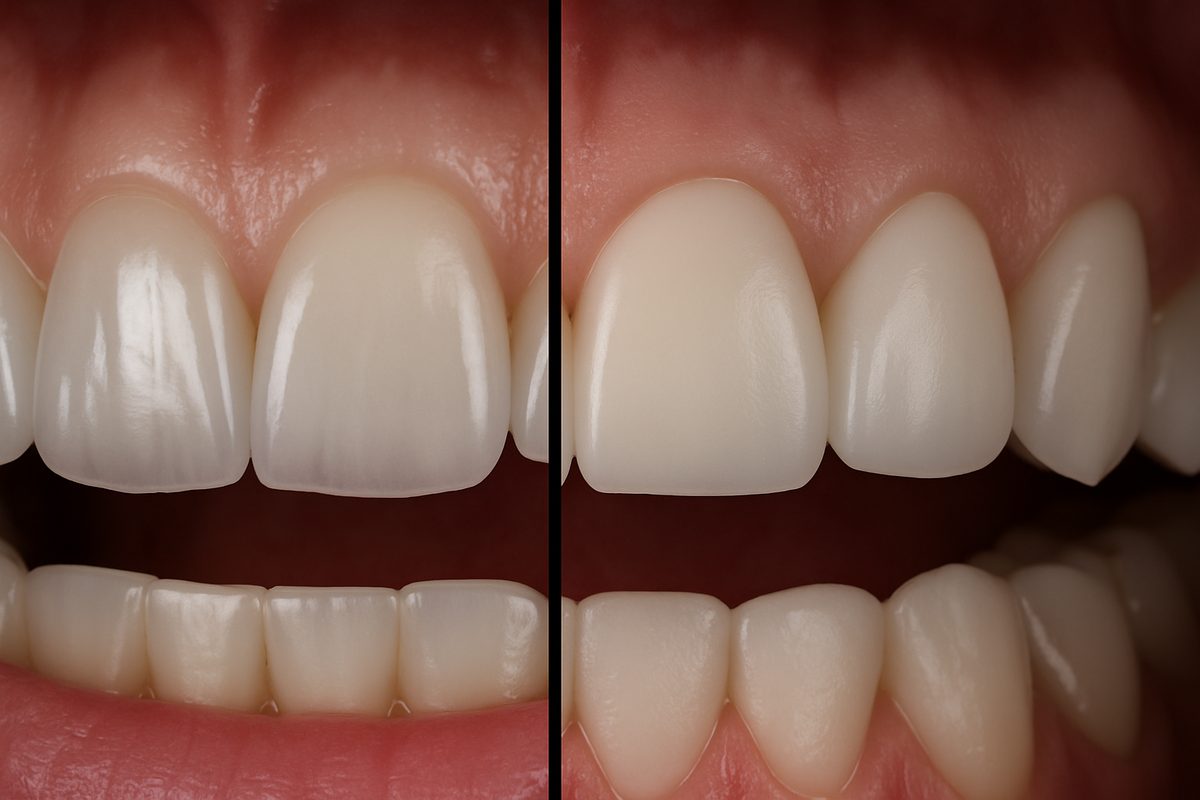
Choosing between porcelain veneers vs composite veneers can feel overwhelming. This post breaks down the key differences—cost, look, durability, and care—so you can decide which fits your goals. It's for anyone considering a cosmetic upgrade: from small chips to full smile makeovers.
Read on to compare porcelain veneers vs composite veneers in Tampa, learn how each is placed, and get practical next steps for a consult.
Porcelain Veneers vs Composite Veneers — Quick Comparison
In short: porcelain veneers look most like natural teeth, resist stains, and last longest but cost more and take multiple visits. Composite veneers cost less, can be done in one visit, and are easier to repair but stain and wear faster. For many Tampa patients, the choice comes down to budget, timeline, and how long you want the result to last.
What Are Porcelain Veneers?
Porcelain veneers are thin shells made in a dental lab and bonded to the front of your teeth. Lab-made porcelain mimics natural tooth translucency and texture, giving a lifelike appearance. Porcelain is also highly stain-resistant compared with tooth enamel and composites.
What Are Composite Veneers?
Composite veneers are built directly on your teeth by the dentist using a tooth-colored resin. The material is sculpted and cured during a single appointment. Because the dentist works directly in the mouth, composite veneers are faster and usually less expensive than porcelain.
Pros and Cons
Porcelain: Pros
- Highly aesthetic and natural-looking
- Long-lasting (often 10+ years)
- Very resistant to staining
Porcelain: Cons
- Higher cost per tooth
- Often requires more tooth reduction
- Needs lab work—multiple visits
Composite: Pros
- Lower cost and single-visit treatment
- Minimally invasive—less tooth removal
- Easy to repair if small chips occur
Composite: Cons
- More prone to staining over time
- Shorter lifespan (usually 5–7 years)
- Can chip more easily than porcelain
Procedure & Timeline
Porcelain Veneer Process
Typical steps: initial consult and smile design, conservative tooth preparation, impressions or digital scans, lab fabrication (1–3 weeks), then final bonding. Expect 2–3 visits from start to finish.
Composite Veneer Process
Composite veneers are placed in one visit. The dentist roughens the tooth surface, applies bonding agent and composite, sculpts the shape, and polishes the result. Small touch-ups can be done easily at later visits.
Durability, Maintenance & Cost
Porcelain veneers commonly last 10–15+ years with good care. Composite veneers usually last 5–7 years. Maintenance for both includes daily brushing, flossing, and avoiding hard habits (ice chewing, opening packages with teeth). Costs vary by number of teeth treated, whether teeth need prep or whitening first, and local pricing. Repairs add to long-term cost for composites, while porcelain may require full replacement if damaged.
Who Is Best Suited For Each Option?
Choose Porcelain If…
- You prioritize a long-lasting, highly aesthetic result
- You want strong stain resistance
- You're willing to invest more and attend multiple visits
Choose Composite If…
- You're budget-conscious or want faster results
- You prefer a reversible or minimally invasive option
- You want an easy repair path for small chips
Dental health considerations
Veneers aren't recommended with active decay, untreated gum disease, or severe bite problems. Some cases need bonding, crowns, or orthodontics first. Your dentist will evaluate tooth structure and bite to decide the safest option.
Common Questions Patients Ask
- Will veneers hurt? Most patients have little to no pain; local anesthesia is used for prep when needed.
- Can I whiten veneers? Natural teeth can be whitened, but existing veneers do not change color—plan whitening before getting veneers.
- What if one chips? Composite can often be repaired quickly; porcelain usually requires replacement of that veneer.
- How many teeth should I veneer? That depends on your smile goals—some patients do 2–4 for a small fix, others do a full smile with 8–10.
Why Consider Peerzada Smiles
For Tampa patients weighing porcelain veneers vs composite veneers in Tampa, Peerzada Smiles offers cosmetic expertise with a patient-first approach. Dr. Taimoor Peerzada and Dr. Reema Bassoumi blend artistry and modern technology in a spa-like setting. Amenities like warm blankets, TVs, and noise-canceling headphones help reduce anxiety so your veneer appointments are comfortable and predictable.
Next Steps & Call to Action
Ready to compare porcelain veneers vs composite veneers for your smile? Schedule a cosmetic consult to review photos, discuss budget and timeline, and see digital mockups. Bring any recent dental X-rays and a list of goals or photos of smiles you like. A short exam and conversation will make the best path clear for your needs.
.webp)


